Nigerian security forces free more than 300 hostages abducted by militants
Nigerian security forces free more than 300 hostages abducted by militants
President hails ‘successful’ rescue as country battles endemic kidnapping for ransom and insecurity worsens
Nigerian security forces have rescued more than 300 abducted people in what the president, Bola Ahmed Tinubu, hailed as the largest single-day hostage recovery in the country’s history.
The release was announced on Wednesday after a joint operation, conducted by the military, police and counter-terrorism units, freed victims held captive in the dense forests of the Kainji Lake national park in the north-central region.
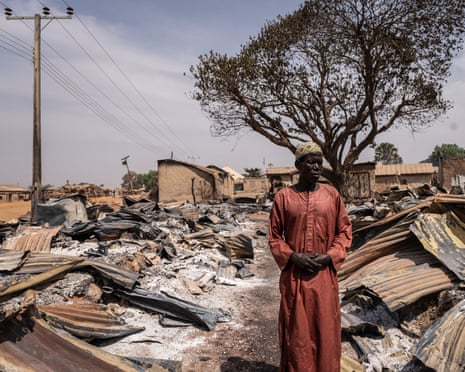
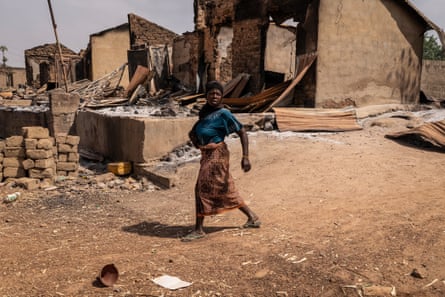
Among those who regained freedom were 163 people abducted in February during a deadly raid on the village of Woro in Kwara state, and 145 others seized primarily from the neighbouring Niger state. Both states are flanked to the west by Benin, where militant attacks have been surging in recent times. Officials confirmed the survivors are receiving medical evaluations at an army installation before being reunited with their families.
“The successful execution of this intelligence-led operation demonstrates the growing efficiency and collaboration among our security services,” Tinubu said in a statement on the presidency’s website. “I commend our gallant men and women in uniform for their bravery and unwavering commitment to safeguarding Nigerian lives.”
The government spokesperson Bayo Onanuga said the rescue operation was part of the president’s resolve to “restore lasting peace across every corner of the nation”.
In the last decade, kidnapping for ransom has become endemic in Africa’s most populous country, especially in the north where different armed groups including bandit gangs and jihadists roam large unoccupied forests and shrublands.
Between July 2024 and June 2025, at least 4,722 people were kidnapped across 997 reported incidents, leading to at least 762 deaths, according to a report by the Lagos-based geopolitical advisory SBM Intelligence. In that 12-month period, abductors demanded ₦48bn ($35m or £26m) in payments, with families and communities ultimately handing over at least ₦2.57bn in ransom to secure the release of their loved ones.
Ahead of January’s presidential election in which Tinubu is seeking a second four-year term, the government has been ramping up reforms and rescue operations as insecurity worsens.
The latest rescue was announced in the same week the army declared the governor of Islamic State West Africa Province, Abu Musa al-Mangawi Baa Shuwa, and his deputy, Amirul Jaish Muhammad Jidda, wanted. The duo run the Islamic State-affiliated Boko Haram offshoot operating primarily around the Lake Chad basin, which straddles Cameroon, Chad, Niger and Nigeria.
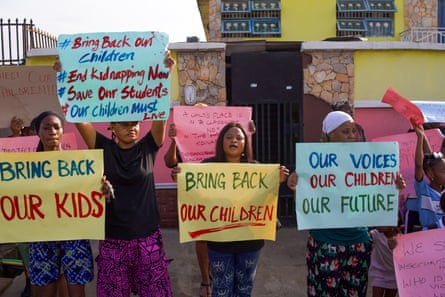
In July, security services freed at least 40 students and teachers who had been kidnapped in May from a school in Oyo in south-western Nigeria.
Last week, the presidency announced a salary increase worth 30% to 80% for thousands of soldiers, the largest hike in years for an army once seen as one of the continent’s most powerful but now derided as underfunded and unequipped to handle concurrent insurgencies across Nigerian territory.