Concerts of pro-Assad singers cancelled after protests in Syria
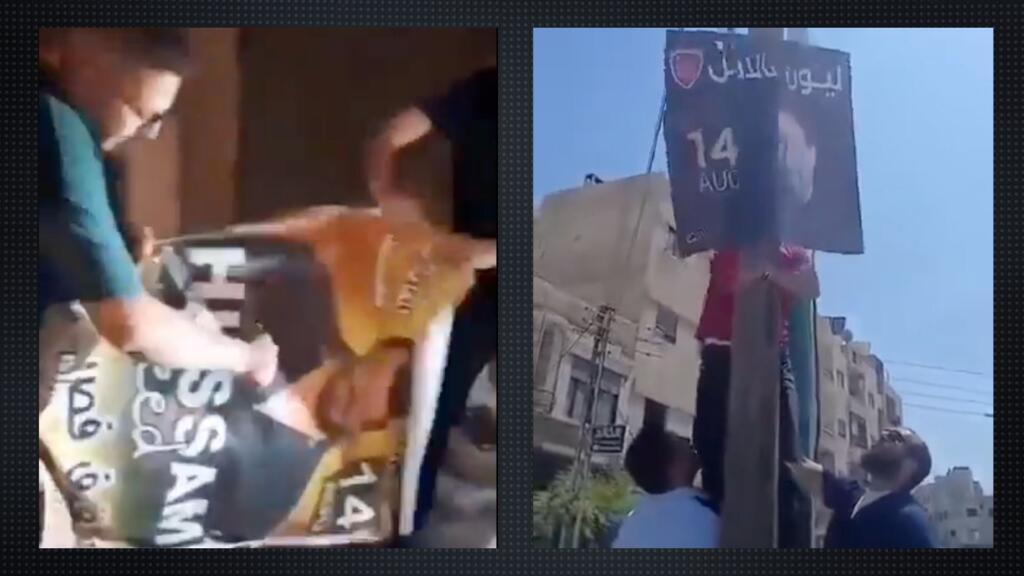

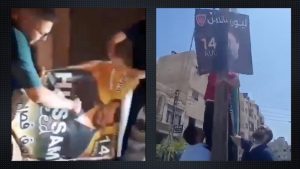
On July 20, angry people in the city of Homs in central Syria ripped down posters advertising concerts for two singers accused of supporting the regime of deposed president Bashar al-Assad.
Lebanese singer Mohamad Iskandar was supposed to appear on August 14 at the Lion Palace, a restaurant and hotel in al-Hawash, a predominantly Christian town about 30 kilometres west of Homs. Syrian singer Hossam Jneed was supposed to give a concert in Homs and then several more in nearby towns, including Sadad.
In light of the protests, management at the Lion Palace hotel announced that very evening that the concert would be cancelled, explaining that they made this decision “out of respect for our people’s feelings and in order to maintain unity and understanding within our community”.
Videos published the same day show people living in Yabroud, north of Damascus, ripping down posters promoting Iskandar’s concert.
In late June, the Syrian Ministry of Culture cancelled the concert of another singer known to have supported the former regime. Shadi Jamil was supposed to perform at the Damascus Opera House.
All three of these artists had historically shown support for Assad and his regime.
Back in 2016, Iskandar sang a song called “Mnemout Kbar” that features explicit references to the former president.
“We won’t accept anyone but Bashar to govern Syria,” he sings.
Hossam Jneed, for his part, released a song in 2013 called “Ya Bashar Metlak Min”, featuring lyrics such as “Oh Bashar, who is your equal? You who hold your head so high!” The song would go on to become a pro-regime anthem.
Shadi Jamil was filmed singing a homage to Syria, the city of Aleppo and to Bashar al-Assad during a concert performed in Venezuela in 2014. In this clip, widely shared in subsequent years, he says, “May God protect Syria under your leadership, Abu Hafez [Editor’s note: a term used for Bashar al-Assad].” This video recently resurfaced, contributing to the controversy around the artist. A number of his concerts were then cancelled.
Songs by these artists widely circulated amongst supporters of the regime and played a role, during the 14 years of the civil war, in spreading Assad’s narrative and vision of the war.
Mohamad Iskandar protests, Hossam Jneed apologises
After Iskandar’s concert was cancelled, he posted a video on social media on July 20, addressing Syrian interim president Ahmed al-Sharaa directly. Iskandar calls on the leader to intervene and support him, saying that he is simply an artist, not political.
Syrian singer Hossam Jneed took a different tack. He posted a public apology to the Syrian people, especially those who had lost family in the war.
“I am your son, and I apologise to all the mothers of martyrs, to all mothers who lost a loved one,” he said in a video published on July 23 on social media. “I apologise to all the Syrian provinces. I am nothing without you. It’s you who gave me life, and I grow thanks to your love.”
‘Homs remains a particularly sensitive area’
Ahmed al-Shamali is a journalist from the Homs governorate. He says that Homs, Syria’s third largest city, which was devastated in the war, remains a sensitive area. Tensions are ongoing between the Sunni population and Alawites. The Assad clan were part of the latter.
“This movement was born of the frustration that some people feel that concerts like this continue to be organised in these zones.
Many of the majority Sunni neighbourhoods in Homs are still in ruins, and the residents haven’t recovered from years of war. The public services are run down, and infrastructure was seriously damaged during the years of the revolution.
So people feel a strong sense of injustice when they see majority Alawite communities in Homs that avoided the worst of the bombing. Many Sunni neighbourhoods remain largely destroyed and, in some cases, uninhabitable.
Concerts are regularly organised in different parts of Homs, under the protection of the security forces, without provoking a similar response. In Wadi al-Nasara, for example, there are concerts every week without incident. But Homs remains a particularly sensitive area, considering everything it experienced during the war. That’s the context for understanding what happened there.
As for the artists involved, their past also plays a role. They were associated with regime propaganda and their position was clearly hostile to the revolution and favourable to the former regime.”
After his June concert was cancelled, singer Shadi Jamil also apologised for past statements.
“I apologise to every young man and every young woman for what I said at my concert in Venezuela. I apologise to every mother and father. Syria is my mother. That time is now over and, today, we are optimistic for the future.”
Moussa al-Sweidan, head of the department of popular culture institutes at the Syrian Ministry of Culture, said that the cancellation of these concerts follows a ministerial directive published in 2025.
“We are working in line with the decision that the Minister of Culture made on November 20, 2025 and which was communicated to all of the organisations, management and cultural centres under the Ministry of Culture. This decision prevents them from organising events or concerts featuring celebrities who, in the past, glorified the deposed regime or presented work that either covered up or denied his crimes against the Syrian people.
The Ministry of Culture is working to follow the successful example of Rwanda after the end of the civil war and genocide in 1994, which enabled this country, formerly destroyed by tribal divisions, to become one of Africa’s most stable, most developed and safest countries.
It is possible that some requests [Editor’s note: for the organisation of concerts] reached those authorised to approve them, but were not properly assessed.
Now, things are much stricter. We hope that in the future, no event will be announced with people who glorified the former regime or supported or covered its crimes.”
This article has been translated from the original in French by Brenna Daldorph.